Year-round · Mountain castle hike
The ruins and viewpoint can be visited in suitable conditions throughout the year, but snow, heat and wet trails require route judgment.
Tourism source ↗Ruins of the Toki clan’s mountain castle remain along the steep trails of 407.5-metre Mt. Kojo. A miniature castle at the summit overlooks Mt. Kinka, the Nobi Plain and, in clear conditions, Mt. Ibuki and distant Nagoya; cloud inversions and sunrise are weather dependent.
Best time to visit: Oct–Nov – Autumn summit hike · Sep–Nov – Clear cool mornings · Sunrise and possible cloud sea
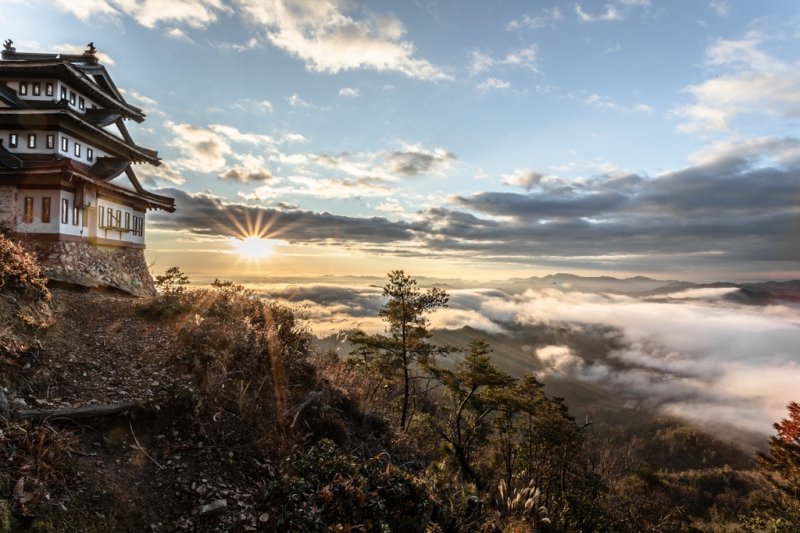
Capture month unconfirmed · Historical photo, not a live view
AUTUMN · Oct
Weather for your date
Today shows live hourly weather. Future dates show the best available report.
16°C
Overcast
💧 8% rain chance · wind 4 km/h
Hourly forecast
Forecast: Open-Meteo
Packing checklist
Parking
Parking has not been verified for this place.
Search nearby parking ↗Leave the start blank to choose your current location in Google Maps. The pin is an approximate landmark; check the entrance and live services in Maps.
A DIFFERENT JAPAN, EVERY MONTH
Typical viewing windows. Weather and bloom dates vary each year; these are not live forecasts.
The ruins and viewpoint can be visited in suitable conditions throughout the year, but snow, heat and wet trails require route judgment.
Tourism source ↗Cooler hiking weather and surrounding colour can make autumn attractive. Check trail conditions and daylight.
Tourism source ↗The summit is recognized for sunrise views; a sea of clouds requires the right temperature, humidity and wind.
Tourism source ↗Suitability
Stroller: Not recommended
Nursing room: Not available
Noise level: quiet
Kids: Both routes contain steep sections; use hiking footwear and bring enough water.
Rules
Fire: no fire
Drones: permit required
Within 30 km, closest first.
A shrine valley protected as a National Natural Monument, where thousands of maple trees frame carved shrine architecture. The strongest colour is normally from mid- to late November, with seasonal parking arrangements during the peak.
A museum dedicated to Mino washi’s long history, materials and production techniques. Exhibits explain how the paper is made, and scheduled hands-on papermaking gives visitors a practical introduction to the UNESCO-recognized craft tradition.
An artist-run guesthouse and papermaking studio in Mino’s Warabi district. Rooms and furnishings use creative washi surfaces, while workshops introduce traditional sheet-making and decoration with natural materials. Contact the property before making the rural detour.
A compact gallery displaying prize-winning light sculptures made from Mino washi. The soft illuminated works provide an indoor stop in the Udatsu district, with a shop and rest area below; check Tuesday and holiday closures.
Mino’s preserved merchant quarter is lined with Edo- and Meiji-era homes featuring udatsu fire walls, once both fire protection and a symbol of prosperity created by the washi trade. Combine the streets with the Former Imai Residence and nearby washi museums.
The former home of a prominent Mino merchant and village headman preserves traditional rooms, storehouses, a courtyard and exhibits about the town’s washi prosperity and festivals. It sits within the Udatsu Wall Historical District.
Gifu Castle stands on Mt Kinka above Gifu City, with panoramic views across the Nagara River and Nobi Plain. The castle keep itself is closed for major work from mid-May 2026 until October 2027, while the ropeway, summit restaurant and squirrel village remain open subject to their own schedules.
A seasonal campsite beside the exceptionally clear Itadori River in Seki. Visitors can camp, use bungalows, enjoy supervised river play and forest time, and use the camp facilities from late spring through early autumn. Buy food and fuel before entering the remote valley and confirm river conditions before swimming.
Place information: Official tourism source · Reviewed 2026-09-26