Late September–mid-October · Lake Toya autumn
Autumn colour around the caldera normally develops before central Japan. Exact timing changes each year with Hokkaido temperatures.
Tourism source ↗A nearly circular caldera lake in the UNESCO Global Geopark around Toyako Onsen, with volcanic islands, Mount Usu views, lakeside hot springs and seasonal sightseeing. Hokkaido foliage arrives earlier than central Japan, while winter brings snow and illumination.
Best time to visit: Sep–Oct – Lake Toya autumn · Nov–Mar – Snow and winter illumination
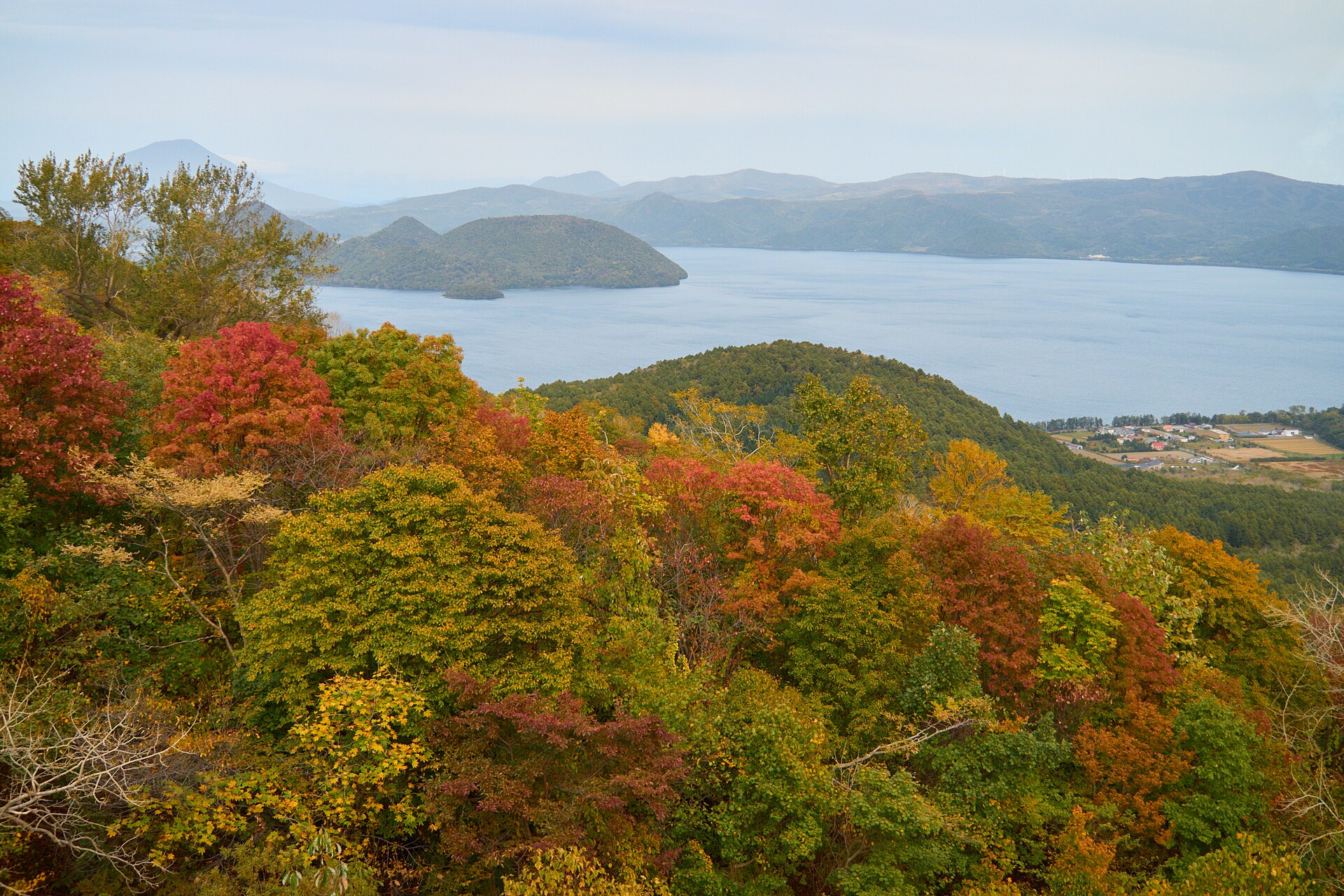
Recorded capture month: Oct · Historical photo, not a live view
AUTUMN · Oct
Weather for your date
Today shows live hourly weather. Future dates show the best available report.
13°C
Mainly clear
💧 0% rain chance · wind 8 km/h
Hourly forecast
Forecast: Open-Meteo
Packing checklist
No tips added for this spot yet.
Parking
Nearby public parking (OpenStreetMap)
NEARBY
· 1 min walk
Vehicle height not verified
Community-mapped nearby parking. Capacity, fees, hours and vehicle limits are not verified; check signs on arrival.
Parking source ↗Leave the start blank to choose your current location in Google Maps. The pin is an approximate landmark; check the entrance and live services in Maps.
A DIFFERENT JAPAN, EVERY MONTH
Typical viewing windows. Weather and bloom dates vary each year; these are not live forecasts.
Autumn colour around the caldera normally develops before central Japan. Exact timing changes each year with Hokkaido temperatures.
Tourism source ↗The official tourism site lists fireworks across the lake during the warm-season run. Check the current dates, weather cancellation and viewing area before travel.
Tourism source ↗Suitability
Stroller: Accessible
Nursing room: Not verified
Noise level: moderate
Kids: Winter paths and roads can be icy; lakeside edges, boat landings and volcanic areas require close supervision.
Rules
Fire: no fire
Water access: lake
Drones: banned
Within 30 km, closest first.
Noboribetsu Onsen and Jigokudani in Hokkaido, prepared with map position, photo, accessibility notes and a month-based planning window.
The 1,898-metre cone rising above Niseko and Kutchan is often called Ezo Fuji. Summer hiking reaches an exposed volcanic rim, while winter turns the mountain and surrounding farms into a powerful snow landscape viewed from safely accessible roads and resorts.
Place information: Official tourism source · Reviewed 2026-09-27