October–November · Historic lanes and autumn
Cool weather suits a castle-town walk and scattered foliage along the rivers.
Tourism source ↗Sogisui is a celebrated spring beside the Kodara River and a starting point for understanding Gujo Hachiman’s channels, wells and water-conscious town life. Nearby public lanes connect the spring with historic streets and rivers.
Best time to visit: Oct–Nov – Historic lanes and autumn · May–Sep – Water-town cooling walk
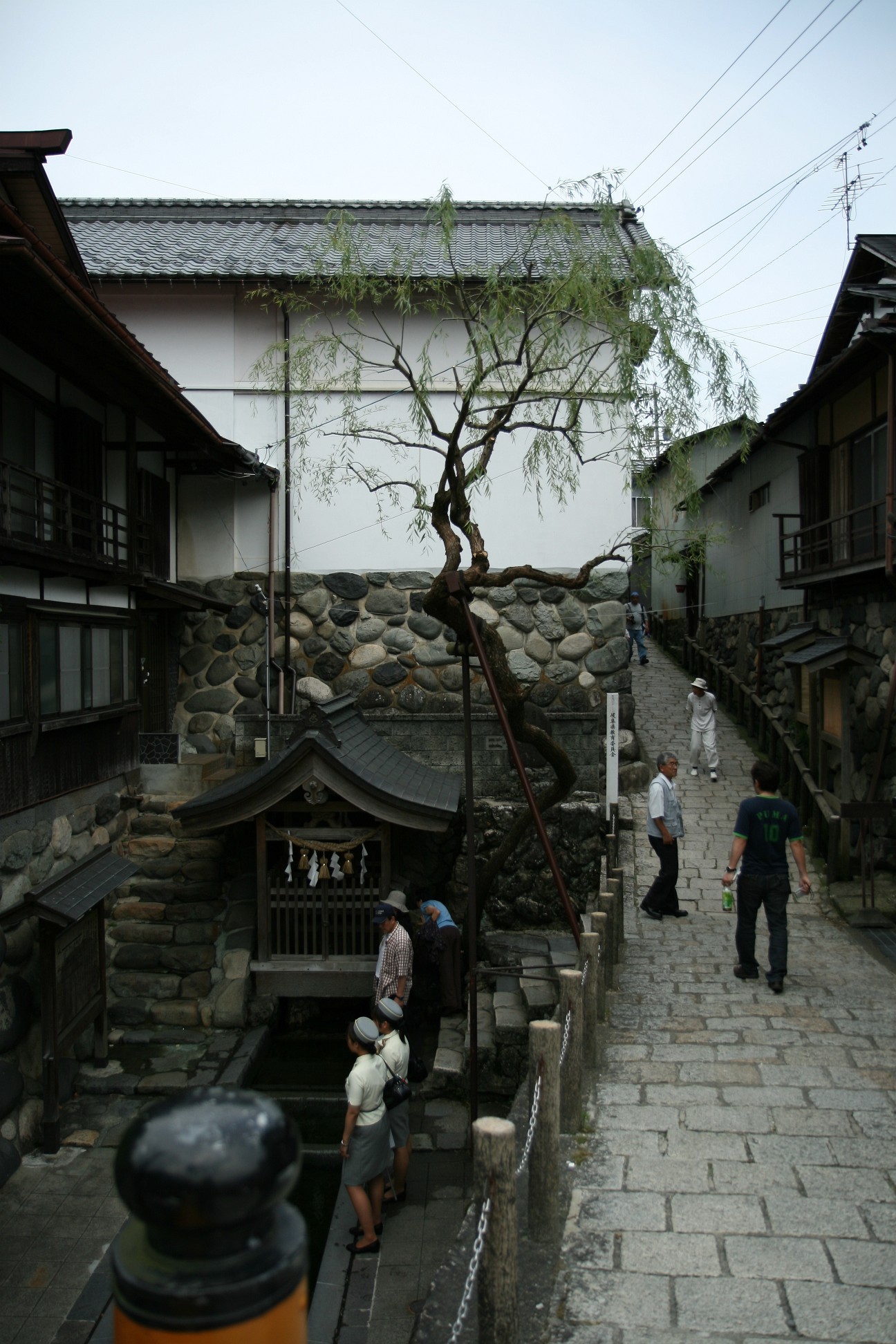
Recorded capture month: Jul · Historical photo, not a live view
AUTUMN · Oct
Weather for your date
Today shows live hourly weather. Future dates show the best available report.
17°C
Partly cloudy
💧 8% rain chance · wind 3 km/h
Hourly forecast
Forecast: Open-Meteo
Packing checklist
No tips added for this spot yet.
Parking
Nearby public parking (OpenStreetMap)
NEARBY
· 3 min walk
Vehicle height not verified
Community-mapped nearby parking. Capacity, fees, hours and vehicle limits are not verified; check signs on arrival.
Parking source ↗Leave the start blank to choose your current location in Google Maps. The pin is an approximate landmark; check the entrance and live services in Maps.
A DIFFERENT JAPAN, EVERY MONTH
Typical viewing windows. Weather and bloom dates vary each year; these are not live forecasts.
Cool weather suits a castle-town walk and scattered foliage along the rivers.
Tourism source ↗Suitability
Stroller: Not recommended
Nursing room: Not verified
Noise level: quiet
Kids: Channels, river edges and narrow traffic streets require close supervision; do not contaminate or enter working water systems.
Rules
Fire: no fire
Water access: river
Drones: banned
Within 30 km, closest first.
A compact museum in a former tax-office building introducing Gujo Hachiman’s water culture, history, crafts and famous Gujo Odori dance. Demonstrations make it a useful orientation stop before walking the town.
A wooden reconstruction on Mt Hachiman overlooking the old water town of Gujo Hachiman. Autumn maples surround the white castle, and under rare cool, humid and calm morning conditions the hilltop may appear above a sea of clouds.
A seasonal campsite beside the exceptionally clear Itadori River in Seki. Visitors can camp, use bungalows, enjoy supervised river play and forest time, and use the camp facilities from late spring through early autumn. Buy food and fuel before entering the remote valley and confirm river conditions before swimming.
An artist-run guesthouse and papermaking studio in Mino’s Warabi district. Rooms and furnishings use creative washi surfaces, while workshops introduce traditional sheet-making and decoration with natural materials. Contact the property before making the rural detour.
A museum dedicated to Mino washi’s long history, materials and production techniques. Exhibits explain how the paper is made, and scheduled hands-on papermaking gives visitors a practical introduction to the UNESCO-recognized craft tradition.
A compact gallery displaying prize-winning light sculptures made from Mino washi. The soft illuminated works provide an indoor stop in the Udatsu district, with a shop and rest area below; check Tuesday and holiday closures.
The former home of a prominent Mino merchant and village headman preserves traditional rooms, storehouses, a courtyard and exhibits about the town’s washi prosperity and festivals. It sits within the Udatsu Wall Historical District.
Mino’s preserved merchant quarter is lined with Edo- and Meiji-era homes featuring udatsu fire walls, once both fire protection and a symbol of prosperity created by the washi trade. Combine the streets with the Former Imai Residence and nearby washi museums.
Place information: Official tourism source · Reviewed 2026-09-27