Explore the place
A daytime reference visit. Check the operator’s opening days and access notices before travelling.
Tourism source ↗Richly carved gates and shrine buildings commemorate Tokugawa Ieyasu in Nikko. Forested surroundings provide a striking setting for the colorful architecture.
Best time to visit: Oct–Nov – Autumn around the World Heritage shrines
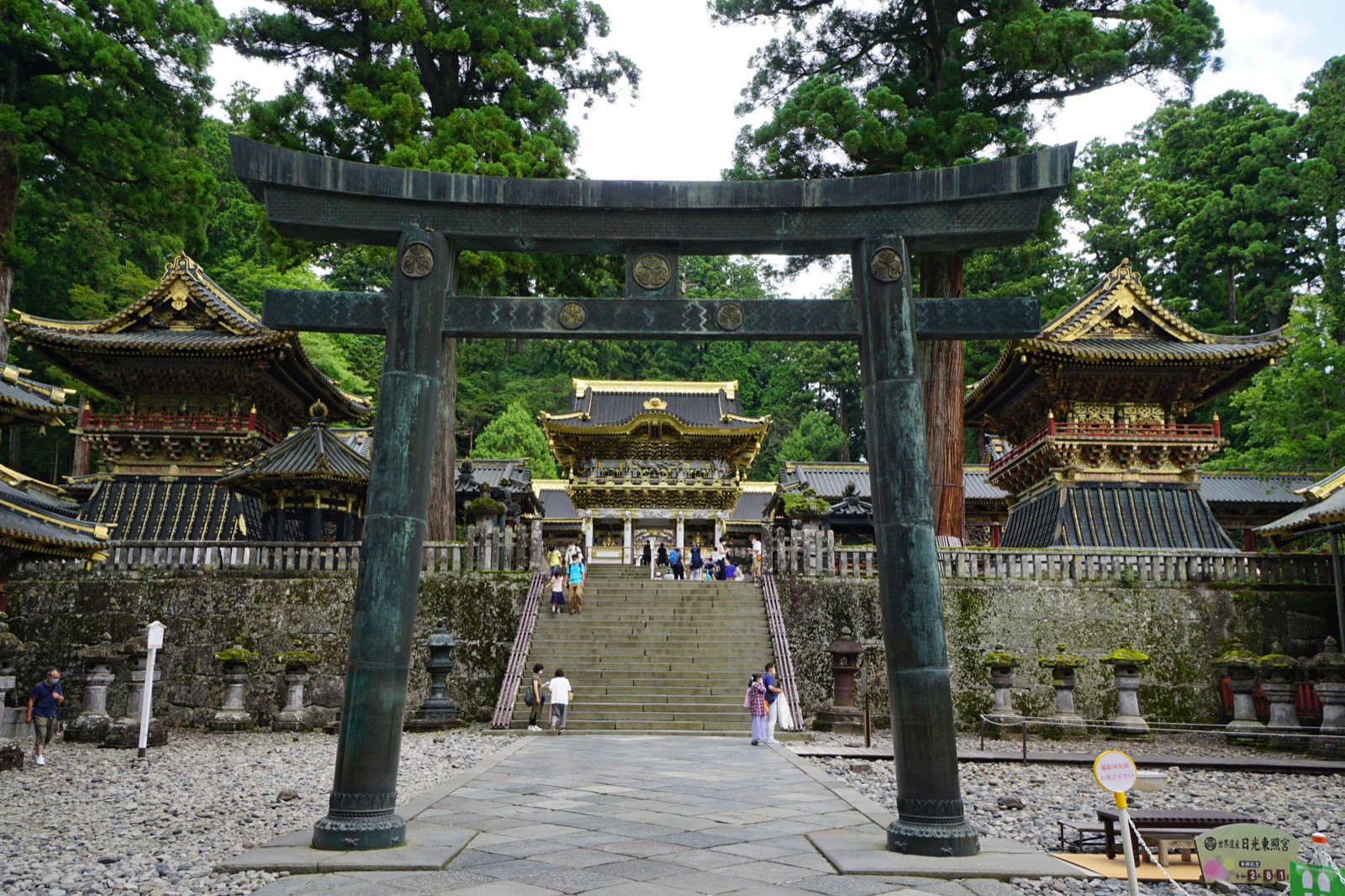
Capture month unconfirmed · Historical photo, not a live view
AUTUMN · Oct
Weather for your date
Today shows live hourly weather. Future dates show the best available report.
14°C
Partly cloudy
💧 0% rain chance · wind 4 km/h
Hourly forecast
Forecast: Open-Meteo
Packing checklist
Parking
Nearby public parking (OpenStreetMap)
NEARBY
· 2 min walk
Vehicle height not verified
Community-mapped nearby parking. Capacity, fees, hours and vehicle limits are not verified; check signs on arrival.
Parking source ↗Leave the start blank to choose your current location in Google Maps. The pin is an approximate landmark; check the entrance and live services in Maps.
A DIFFERENT JAPAN, EVERY MONTH
Typical viewing windows. Weather and bloom dates vary each year; these are not live forecasts.
A daytime reference visit. Check the operator’s opening days and access notices before travelling.
Tourism source ↗Central Nikko typically has autumn foliage from late October to mid-November. Combine the shrine visit with nearby paths in the World Heritage district. Higher-altitude Oku-Nikko changes earlier, so do not use this window for the lakes and mountain passes. Timing varies each year; this is not a live forecast.
Tourism source ↗Late October–early November · Nikko autumn evening. Event dates, admission and lighting hours change by year; check the official source before travelling.
Tourism source ↗Suitability
Stroller: Not verified
Nursing room: Not verified
Noise level: moderate
Kids: Steps and uneven surfaces; winter conditions may affect footing.
Rules
Within 30 km, closest first.
An ancient World Heritage shrine dedicated to the sacred mountains of Nikko, set among old cedar trees between Toshogu and Taiyuin.
The ornate mausoleum of Tokugawa Iemitsu, the third Tokugawa shogun, built in a cedar forest with decorated gates and halls.
Nikko’s principal Buddhist temple complex, founded in the eighth century and centred on the restored Sanbutsudo hall with three large gilded Buddha figures.
A vermilion bridge over the Daiya River marking the entrance to Nikko’s World Heritage shrine and temple area. The present bridge is a celebrated foreground for mist, fresh greenery and central Nikko’s autumn colour.
A large wooden imperial residence combining Edo, Meiji and Taisho architecture, surrounded by a landscaped garden.
A quiet riverside gorge with a long row of stone Jizo statues, mossy forest and the fast-flowing Daiya River.
A spacious auto campground inside Nikko Daiya River Park with tent, camper and cabin options near central Nikko.
Two one-way mountain roads with 48 hairpin curves connect central Nikko with Lake Chuzenji and Oku-Nikko. Akechidaira provides a high viewpoint toward Kegon Falls and the lake, while the road itself becomes one of Nikko’s best-known autumn drives.
Place information: Official tourism source · Reviewed 2026-09-28